How to Run Your First D&D Session as Dungeon Master
How to DM your first D&D session, step by step: what to prepare as Dungeon Master, how to start the game and what to do when things go wrong.
So you’ve decided to be the Dungeon Master. Maybe nobody else in your group wanted to, maybe you’ve watched enough actual-play shows to think “I could do that”, or maybe you just want to play D&D and someone has to run it. Whatever the reason: welcome. It’s the best seat at the table.
It’s also the scariest at first. You’re in charge of the world, every monster, every innkeeper and the rules, and your friends are looking at you. The good news is that your first session doesn’t need to be perfect. It needs to be fun. Here’s a step-by-step guide to running your first D&D session, from picking an adventure to wrapping up the night.
Rook’s first time behind the screen was a one-shot for four friends who had never played. The good: everyone laughed, the story worked, and two of them asked for a campaign the same night. The bad: about 40 pages of notes, of which maybe four got used, and a final fight that ran an hour too long because of rules lookups.
Step 1: Keep the first game small
Don’t start with a year-long campaign. Start with a one-shot, a complete adventure that fits in a single three- to four-hour session. It takes the pressure off, gives you a clear ending, and lets everyone find out if they enjoy playing together before committing to anything bigger.

Good options for a first game:
- An official starter adventure. The D&D Starter Set includes a beginner adventure, pre-made characters and rules, designed for exactly this.
- A short published one-shot. You’ll find many on the DMs Guild, often for free or very little.
- Something tiny of your own. A village, a problem, a dungeon with five rooms. That’s plenty.
Step 2: Use pre-made characters
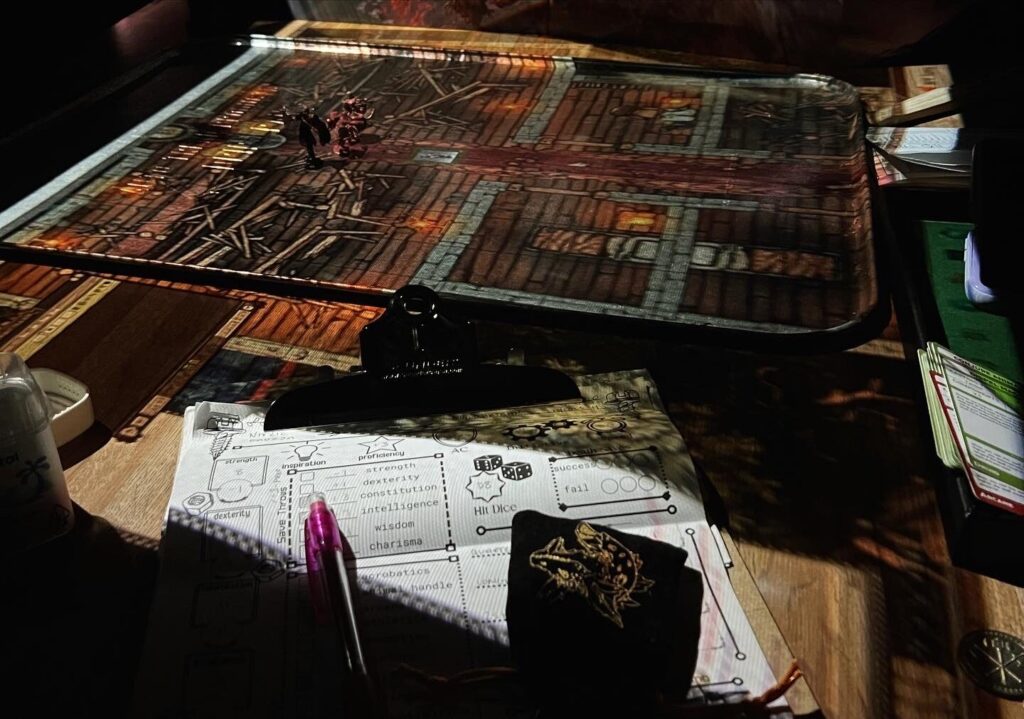
For a first session, hand your players pre-generated characters. Making characters takes time, and new players get stuck on choices they don’t understand yet. Pre-gens let everyone start playing within minutes. If your players are keen to make their own, do it together in a separate session (see “Session zero” below), and point them to D&D Classes Explained.
Step 3: Prepare the right things (not everything)
New DMs often over-prepare. You can’t predict what players will do, so detailed scripts get thrown away. Prepare the things that help you improvise instead. Many DMs use a version of the “lazy DM” approach popularised by Sly Flourish. For a first session, focus on:
- A strong start. Begin in the middle of something: the caravan is under attack, the tavern is on fire, a stranger bursts in bleeding. No slow introductions.
- A few scenes. Three or four places or situations the adventure might go through. Not a fixed order, just options.
- Secrets and clues. Five to ten facts the players could discover (“the mayor is lying”, “the cult meets under the mill”). Drop them wherever it makes sense, rather than hiding each behind one specific door.
- A handful of characters. Each with a name, one personality trait and what they want. That’s enough to voice them.
- A list of names. Players always ask the name of the random guard. Have ten ready.
- Monsters and their stats. Bookmark the stat blocks you’ll need so you’re not flipping pages mid-fight.
Step 4: Know the core rules (and forget the rest)
You don’t need to memorise the rulebook. You need to know:
- Ability checks: roll a d20, add a modifier, beat a target number (a Difficulty Class). An easy task is around 10, a hard one 15 to 20.
- Advantage and disadvantage: roll two d20s and take the higher or the lower.
- Combat: roll initiative, take turns, each turn is move plus one action.
- Death saves: at 0 hit points, a player rolls a d20 each turn, 10 or higher is a success, three successes or three failures decide it.
Everything else you can look up later or decide on the spot. If you’re unsure of a rule mid-game, make a quick, fair ruling, keep playing, and check after the session. (Our How to Play D&D: A Complete Beginner’s Guide covers these basics.)
Step 5: Session zero
Before the first real game, or at the start of it, spend twenty minutes on a session zero. Talk about:
- Tone. Silly or serious? Heroic or gritty?
- Boundaries. Anything people don’t want in the game. Many tables use “lines and veils”: lines never happen, veils happen off-screen.
- Logistics. How often you’ll play, how long, and what happens when someone can’t make it.
- Expectations. More fighting, more talking, more exploring? Knowing what your players enjoy is the most useful thing you can learn.
Step 6: Running the session
Set the table
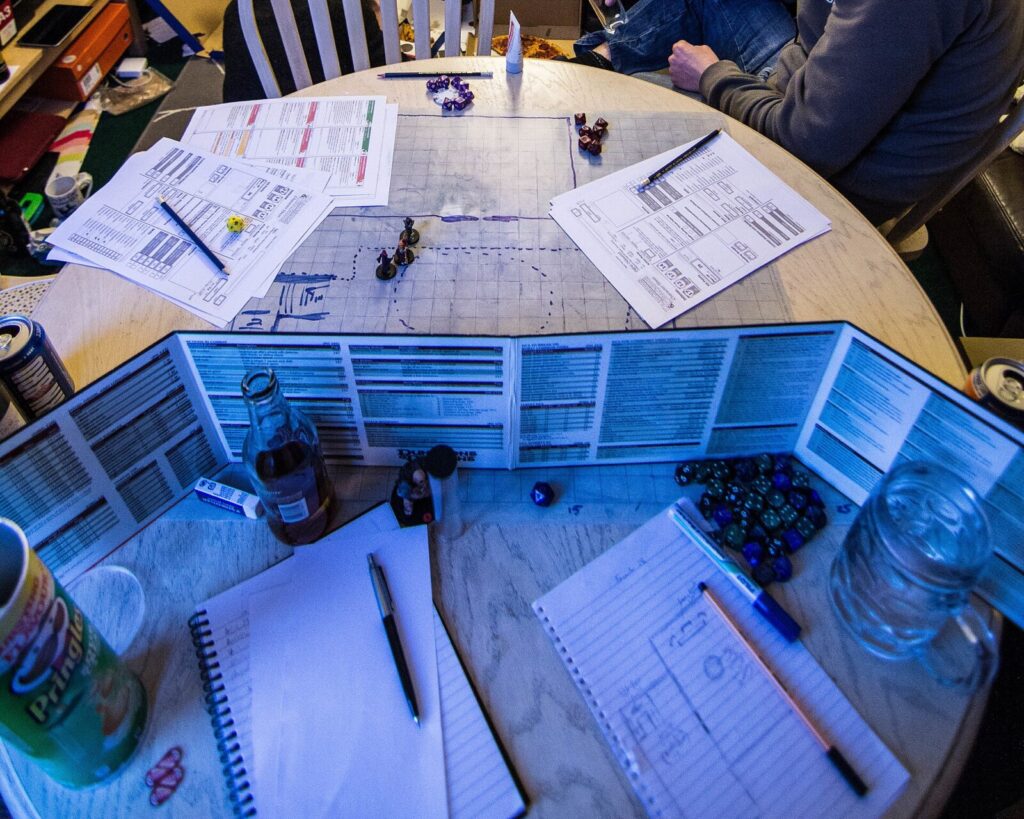
Have dice, character sheets, pencils, a few snacks and something to track initiative (a notepad works fine). Put on some quiet background music if you like. We have a whole guide to that: The Best Music for Your D&D Sessions.
Describe with the senses
Don’t just say “you enter a cave”. Say what it smells like, what they hear, what’s on the floor. Two or three details are enough. Then ask the most important question in D&D: “What do you do?”
Say “yes, and” (or “yes, but”)
When players try something you didn’t expect, the easiest answer is usually yes, sometimes with a roll or a complication. A player wants to swing from the chandelier? Great, make a Dexterity check. Saying no too often kills the energy. Saying yes makes the story theirs too.
Give everyone the spotlight
Some players talk a lot, others wait to be asked. Keep an eye on who hasn’t done anything for a while and turn to them directly: “Mira, while the others argue with the guard, what are you doing?”
Keep combat moving
- Describe hits and misses in a sentence, not just numbers.
- Let monsters run away or surrender when the fight is clearly over.
- If a fight is dragging, have the remaining enemies flee or let the last hits finish them. Nobody remembers the last ten minutes of a boring fight fondly.
Step 7: When things go off the rails
They will. Players will ignore your carefully planned dungeon to open a bakery, befriend the villain or set the wrong building on fire. That’s not failure, that’s D&D. Some tips:
- Move your content. If they skip the haunted mill, the clue you put there can turn up somewhere else.
- Take a break. If you need a moment to think, call a five-minute snack break. Players won’t mind.
- Ask them. “What do you think is going on?” Players often come up with better ideas than you had, and you can quietly use them.
Step 8: End on a high note
Try to finish at a dramatic moment, or right after a satisfying win. Then take five minutes to talk about the session: what everyone enjoyed, what they’d like more of. Write down a few notes about what happened while it’s fresh.
Common first-time DM mistakes
- Over-preparing. You’ll write ten pages and use two.
- Railroading. Forcing players down one path because you planned it. Let them surprise you.
- Stopping for rules. A wrong ruling that keeps the game moving beats a perfect one after ten minutes of searching.
- Making it too hard. New players and new DMs both need wins. Start with easier fights.
- Comparing yourself to actual-play shows. Professional voice actors with production teams are not the standard for a game night with friends.
Frequently asked questions
How long should I prepare for my first D&D session?
An hour or two is plenty for a one-shot, especially with a published adventure. Focus on the opening scene, a few key characters and the monsters.
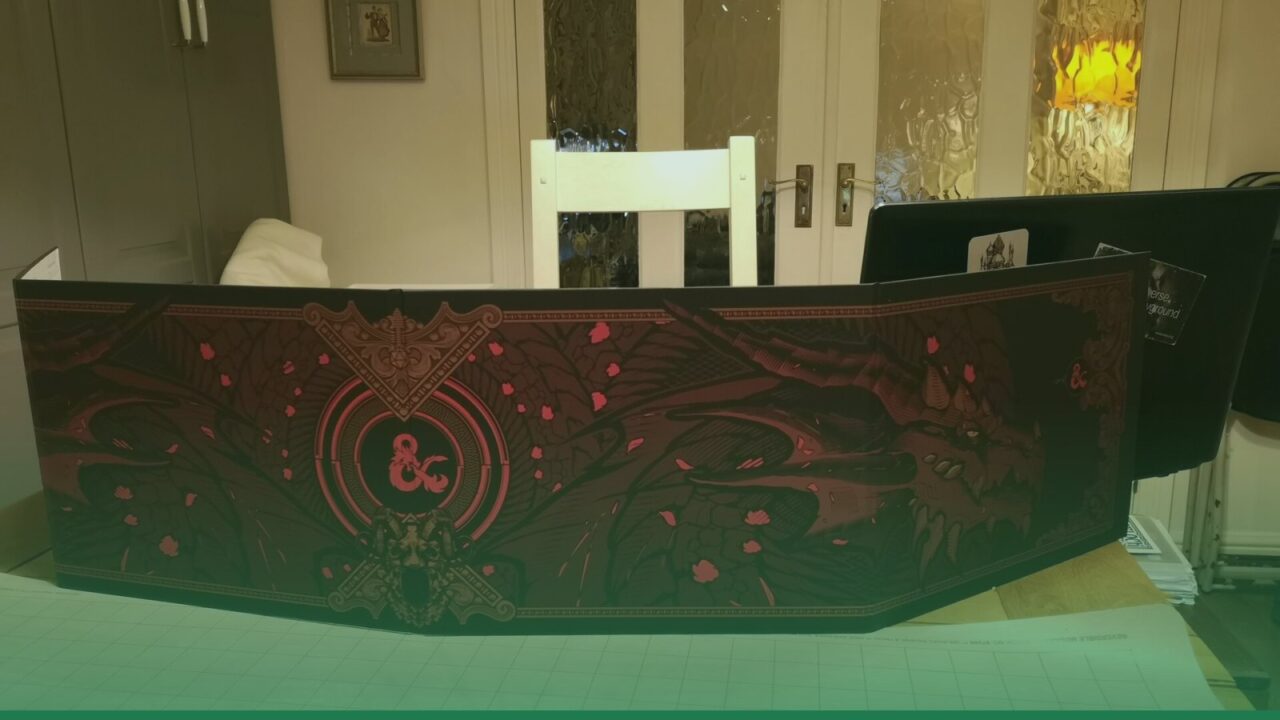
Do I need a DM screen?
No. It’s handy for hiding notes and rolls, but a folder or a laptop works fine.
How many players should a first-time DM run for?
Three or four is ideal. Larger groups are harder to manage and make combat slower.
What if I get a rule wrong?
Nothing bad happens. Make a call, keep playing and look it up afterwards. Every DM gets rules wrong, including very experienced ones.
You’ve got this
Your first session will have awkward pauses, a forgotten rule or two and at least one moment where you have no idea what happens next. Your players will still have a great time, because they’ll be telling a story together with their friends, and you made that happen. Good luck, and may your players’ dice roll high (but not too high).