Why Assassin’s Creed Odyssey Still Matters, Eight Years On
Assassin's Creed Odyssey changed the series and put Greece and Greek actors at its centre. Why it still matters, as its two leads visit Bristol.
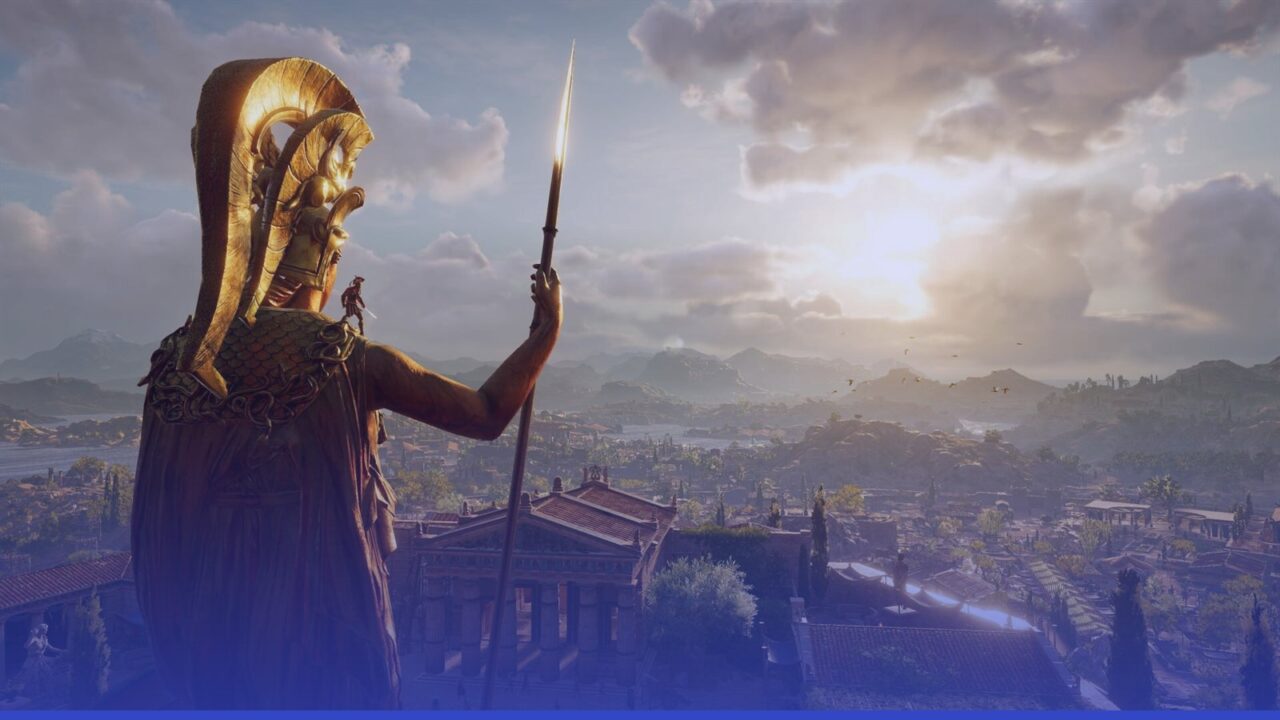
Eight years after its release, Assassin’s Creed Odyssey has made it into a university lecture theatre. On 5 and 6 November, the University of Bristol is hosting Myth in Motion: Embodying Ancient Greece in Assassin’s Creed Odyssey, with the game’s two leads, Melissanthi Mahut and Michael Antonakos, as guests. It is a good moment to ask why this game still gets people talking, and what it changed for the series and for the way Greece appears in games.
The short answer is that Odyssey was a turning point twice over. It pushed Assassin’s Creed further from its stealth roots than any game before it, and it gave one of the biggest franchises in gaming a Greek world, voiced at its centre by actors with Greek roots.
The game that went all in on RPG
Released on 5 October 2018 and led by Ubisoft Quebec, Odyssey is set between 431 and 422 BCE, during the Peloponnesian War between Athens and Sparta. Assassin’s Creed Origins had started the move towards role-playing a year earlier, but Odyssey went much further.
You chose whether to play the whole game as Kassandra or Alexios. You picked your lines in conversation, made decisions that led to different endings and could pursue romances regardless of your character’s gender. Commit a crime and mercenaries came after you. Take to the sea and your ship, the Adrestia, became a home as much as a weapon. An optional exploration mode even replaced some of the usual waypoints with clues from the people you met.
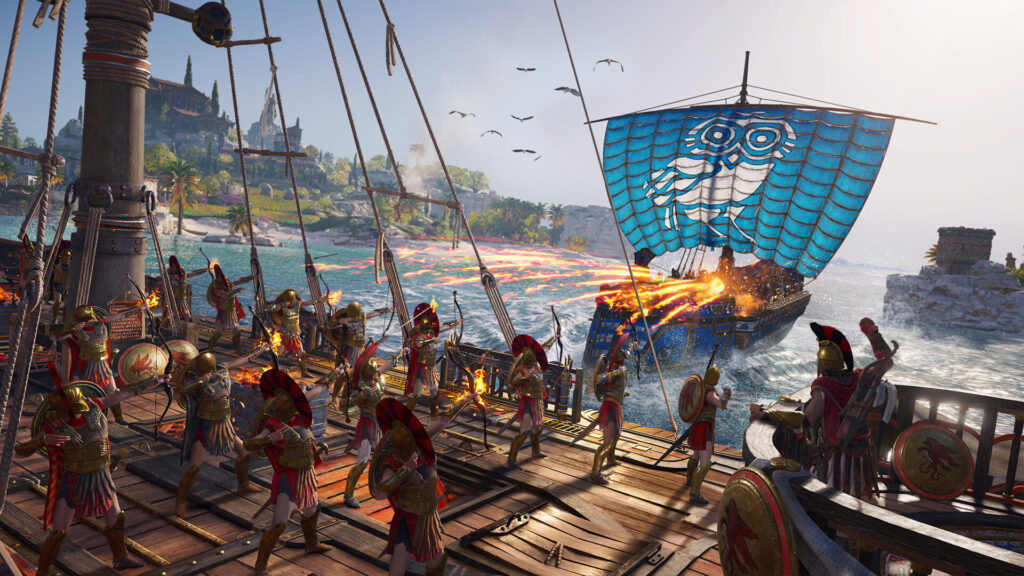
It sold. Ubisoft reported the best launch-week sales of the franchise’s console generation at the time, and the game had passed 10 million copies by March 2020. It was also nominated for Game of the Year at The Game Awards 2018.
Not everyone was happy, and that is part of its legacy too. Critics praised the world and characters but questioned the pacing and the sheer size of the thing, and Ubisoft drew criticism for selling experience boosts. Assassin’s Creed Valhalla carried the formula forward in 2020, and then Assassin’s Creed Mirage went the other way in 2023, a smaller game shaped partly by fans who wanted something less enormous. The series has been arguing with Odyssey ever since, which is about the clearest sign of influence you can get.
Kassandra and the Greek casting
Audio director Lydia Andrew explained at the time that the team wanted to cast Greek actors rather than rely on performers doing an accent. It sounds like a small production detail, but you can hear the difference across a game this long.
Melissanthi Mahut, who holds Greek and Canadian citizenship, was raised in Greece and trained at the National Theatre of Greece Drama School before RADA. Her Kassandra became the performance most people remember, bringing nominations at The Game Awards, the BAFTA Games Awards and the D.I.C.E. Awards. Michael Antonakos, who also has Greek heritage, played Alexios, the other half of the same story. Elias Toufexis, another actor of Greek descent, voiced Leonidas and Nikolaos.
Kassandra’s story also reaches beyond the game. A 2020 Bloomberg report claimed she was originally meant to be the only playable lead, with Alexios added as a compromise, and she is the canon Eagle Bearer in the novel. She has since returned in a Valhalla crossover and in Assassin’s Creed Nexus VR, and many fans still regard her as one of the best protagonists the series has had. The Odyssey story has its sore spots as well: the Legacy of the First Blade expansion angered players over how it handled their choices in relationships.
Why the Greek world matters
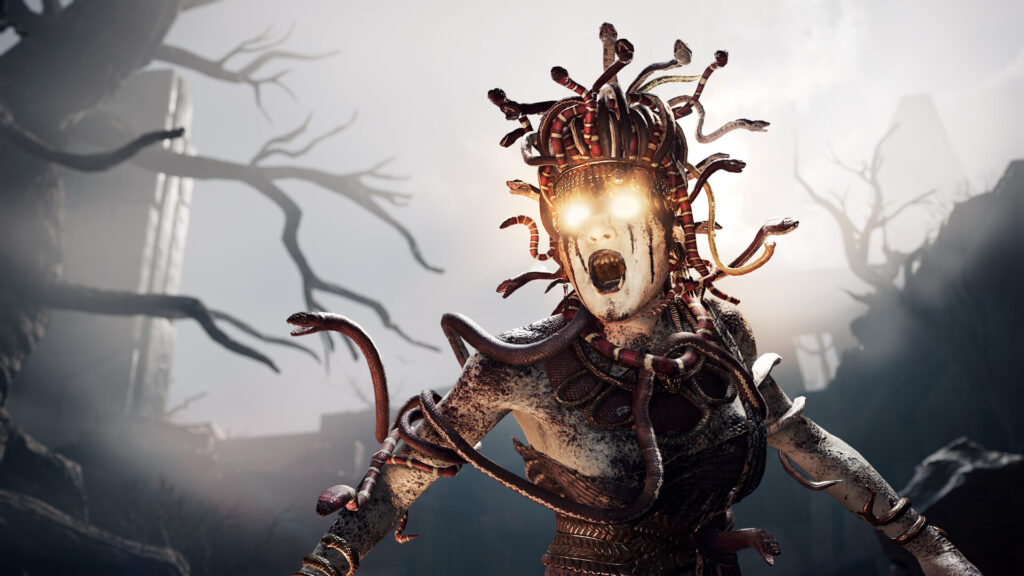
Greece has always been popular in games, usually as a backdrop of gods and monsters. Odyssey does have those: Medusa and the Minotaur are here. But the reason it stands out is how much ordinary ground it covers. You sail between islands, walk through markets and farms, and argue with Sokrates, drink with Perikles and meet Herodotos, Hippokrates and Aspasia along the way. Athens has its painted statues and temples, closer to how they would have looked than the white marble of the popular imagination.
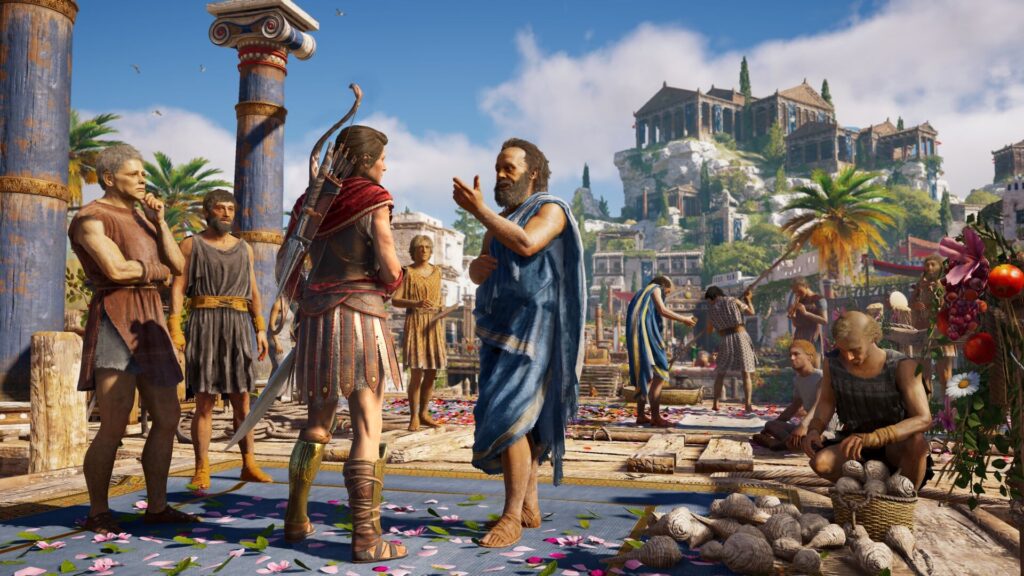
For Greek players there is something else going on. It is not often that a game this large is built around places you know, and hearing a passing “malaka” in a blockbuster is a very particular kind of joy. For everyone else, it became an introduction to a history most of them only half remembered from school.
Ubisoft leaned into that. Discovery Tour: Ancient Greece arrived in September 2019 as a free update, removing combat and turning the map into a guided educational mode, with material reviewed by historians and archaeologists. In 2023 the game went into a real museum, when the Ashmolean in Oxford used it in its Labyrinth: Knossos, Myth and Reality exhibition, projecting its version of the palace alongside objects from Crete.
It is fair to keep this in proportion. Odyssey is a game with mind-controlling artefacts and a magic spear, not a history lesson, and historians have plenty of objections. It is also a Canadian-led production and not a Greek one. And there is an irony that Greek players will spot at once: the Steam page lists 15 interface languages, and Greek is not one of them. The most famous game set in Greece cannot be played in Greek.
Even so, the effect is real. A generation of players now has a mental map of the Aegean, Greek actors got leading roles in one of the world’s biggest game series, and a university can treat all of this as a serious subject.
From motion capture to the lecture theatre
That is where Bristol comes in. The event, hosted by the Bristol Digital Game Lab and the university’s Institute for Greece, Rome and the Classical Tradition, looks at how developers and actors worked together, describing it as “embodied archaeology”: rebuilding the past from fragments, much as classicists do. The public session on 5 November focuses on the actors’ work on their characters, and 6 November is a workshop and game jam for students.
We will follow up with what came out of it, using whatever official pictures and videos appear. In the meantime, if you have never played Odyssey, it is an easy game to return to or start, and the Discovery Tour is a fine way to show someone who does not usually play games what the fuss is about.
Where to get it: Steam
For more on games and the people making them here, visit our Greek Games hub.